Photo Page 3
Sound City 50 Plus
- 1: 50 Plus
- 2: 50 Plus
- 3: 50 Plus
- 4: 50 Plus w/ 2x12 Cabinet
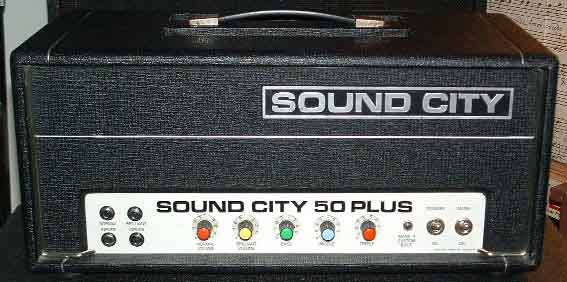
- 5.1: 50 Plus Front View
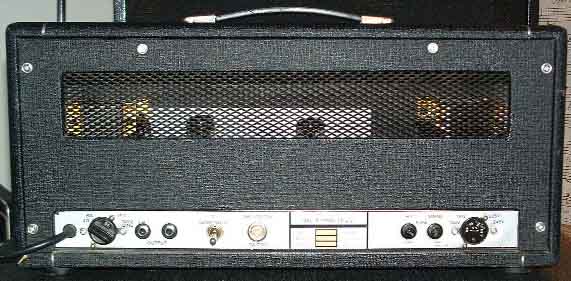
- 5.2: 50 Plus Rear View
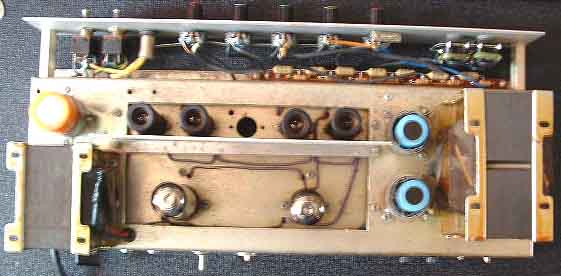
- 5.3: 50 Plus Chassis Top View
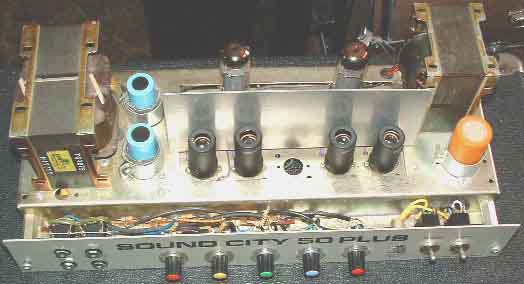
- 5.4: 50 Plus Chassis Front Oblique View
- 5.5: 50 Plus Chassis Interior View
- 6.1: 50 Plus Pair Front View
- 6.2: 50 Plus Pair Rear View
- 7.1: 50 Plus Front View
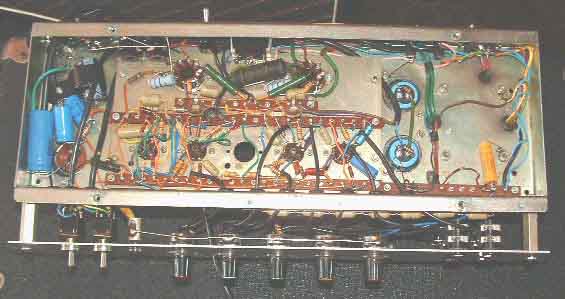
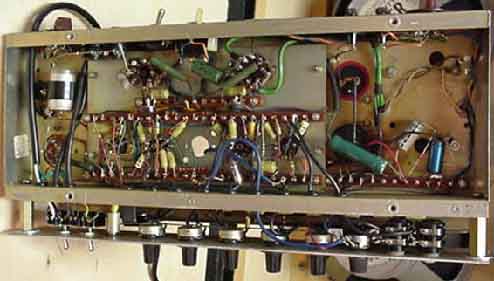
- 7.2: 50 Plus Chassis Interior View
- 8.1: 50 Plus Front View
- 8.2: 50 Plus Rear View
- 8.3: 50 Plus DMI Label Close-up
- 8.4: 50 Plus Rear Label Close-Up
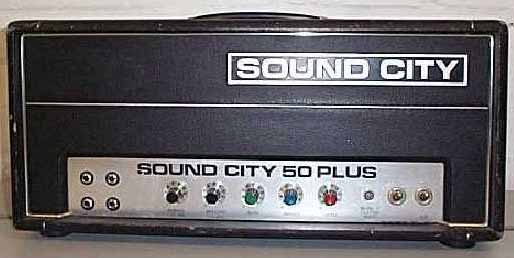
~50 watts from two EL34s, Dallas Arbiter-era Mark 4 (IV), smooth black Tolex, colored knobs, silver vein and trim, small plastic logo. Photos Home Page
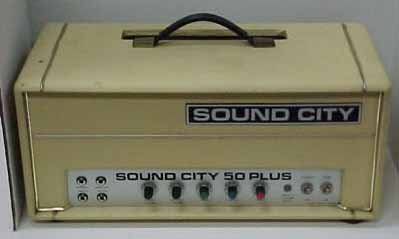
~50 watts from two EL34s, Dallas Arbiter-era Mark 4 (IV), custom-order beige (cream) Tolex (rexine?), colored knobs, gold vein and trim, small plastic logo. Photos Home Page
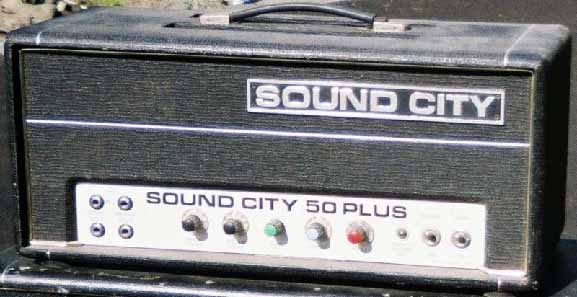
~50 watts from two EL34s, Dallas Arbiter-era Mark 4 (IV), black "basketweave" Tolex, colored knobs, silver vein and trim, small plastic logo. Photos Home Page
4:
Sound City 50 Plus Front View
Head:
~50 watts from two EL34s, Dallas Arbiter-era Mark 4 (IV), black basketweave
Tolex, original multi-colored colored knobs, gold vein and trim, small
plastic logo.
2x12 Cabinet
Front View:
Dallas Arbiter-era, Model L60 or B60, black basketweave Tolex, thicker
rounded (Hiwatt-like) front edges, removable grill panel, front-loaded
speakers, original removable grill cloth, original gold metal grill trim,
silver vein, possibly original casters, no logo (should have centered
or slightly offet-right logo as on the 50 Plus). Photos
Home Page

5.1:
Sound City 50 Plus Front View
~50 watts from two EL34s, Dallas Arbiter-era Mark 4 (IV), black basketweave
Tolex, original multi-colored knobs, gold vein and trim, small plastic
logo. A scrupulously clean example of a great little amp. Photos
Home Page
5.2: Sound City 50 Plus Rear View Photos Home Page
5.3: Sound City 50 Plus Chassis Top View Photos Home Page
5.4: Sound City 50 Plus Chassis Front Oblique View Photos Home Page
Note the Union Jack DMI logo on the top 50 Plus. Here is a photo of their owner's band, Hobgoblin, circa 1970ish. Note the wall of Sound City gear, and that the bass player (again, the owner of the two 50 Pluses shown here) is using a 50 Plus for bass. Photos Home Page
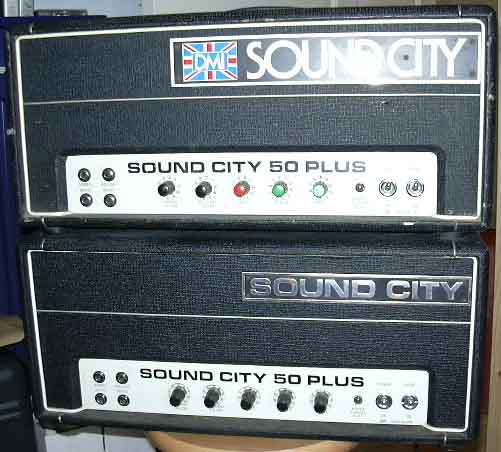
It's obvious from these two photos that, aside from the logo change, the transition from Dallas Arbiter to DMI had little effect on the cosmetic features of the 50 Plus. Photos Home Page
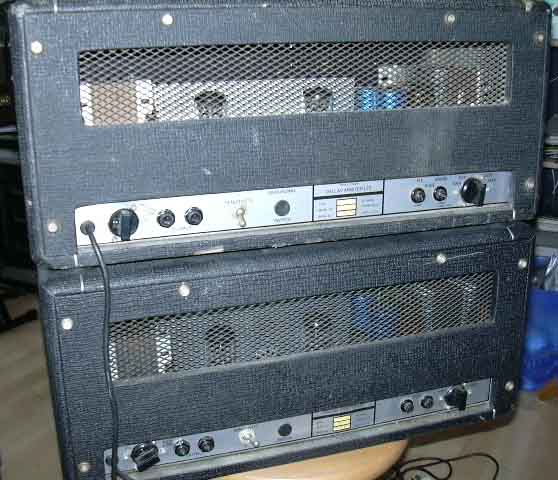
7.1:
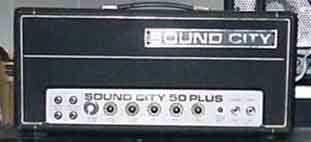
Sound City 50 Plus Front View
~50 watts from two EL34s, Dallas Arbiter-era Mark 4 (IV). This is
a model L50 with SN 2498, and it bears a date tag of 9/3/76.
This model has reverb and also has the black knob caps indicative of a
later model. Earlier models appeared to have colored knob caps, but this
is far from incontrovertible. Photos
Home Page
7.2:
Sound
City 50 Plus Chassis Interior View
Compare this photo to Photo 5.5 above and note what appears to be
an extra layer of tag boards in this amp, which
is probably for the reverb. Photos
Home Page
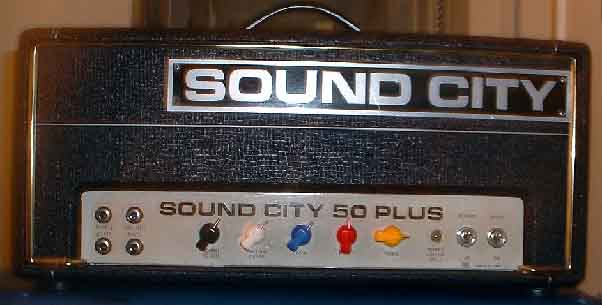
~50 watts from two EL34s, DMI-era Mark 4 (IV). Clearly these are non-original knobs, but they do represent a very clever way of mimicking the colored knobs on stock Sound City heads, although many of the DMI-era Sound City heads had black knobs. Photos Home Page
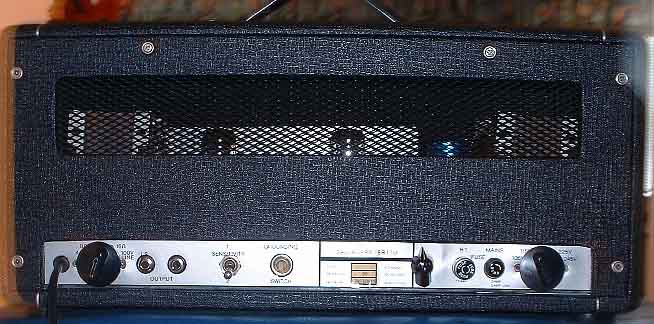
Note the extra knob on the rear panel, which is probably a master volume control and is a popular modification to make on Sound City heads notorious for their lack of gain and abundant headroom. Also note something that was unique to a few Sound City heads, including this model: the output transformer is on the left and the power transformer is on the right, which is opposite from most other Sound City heads. Photos Home Page
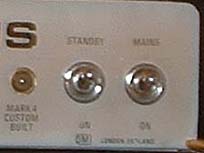
This photo shows the Dallas Music Industries (DMI) label, just below the Standby switch, which is seen on Bass 150 heads, L150 heads, and other amps built during the DMI-Sound City era. Photos Home Page
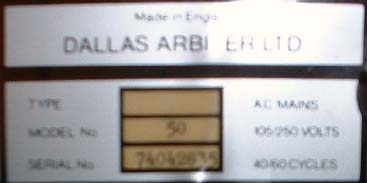
In this photo you can once again see the two-digit prefix in the serial number (which for this amp is "74") that is suggestive of the year 1974, and which, if accurate, places this head squarely in the Dallas Arbiter-to-DMI transitional period (c1973--1974). Many heads and cabinets from this period (and beyond) bear this serial numbering scheme, but that this scheme definitely indicates a year of manufacture is still open to conjecture. Photos Home Page